
Bottom, Side, and Top Seals Replaced With Material Rated for Milwaukee's Full Winter Range
Retaining channel condition checked before any new seal goes in.
Standard vinyl seals stiffen and lift off the floor below −10°F. EPDM rubber rated to −40°F holds floor contact at every temperature Milwaukee actually records. Bottom, side, and top zones replaced together — air infiltration from a worn header seal contributes as much as a damaged bottom seal in older garages.
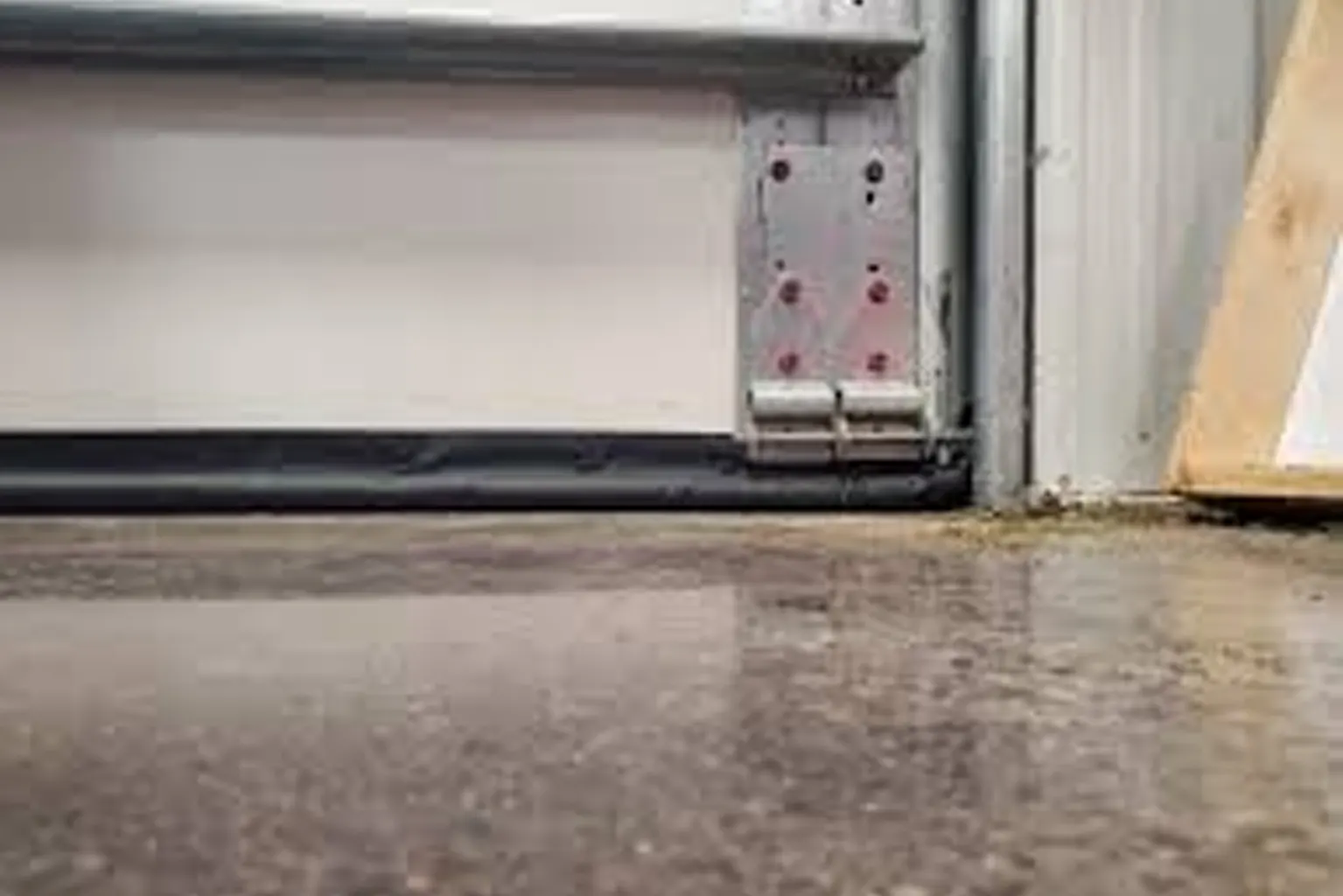
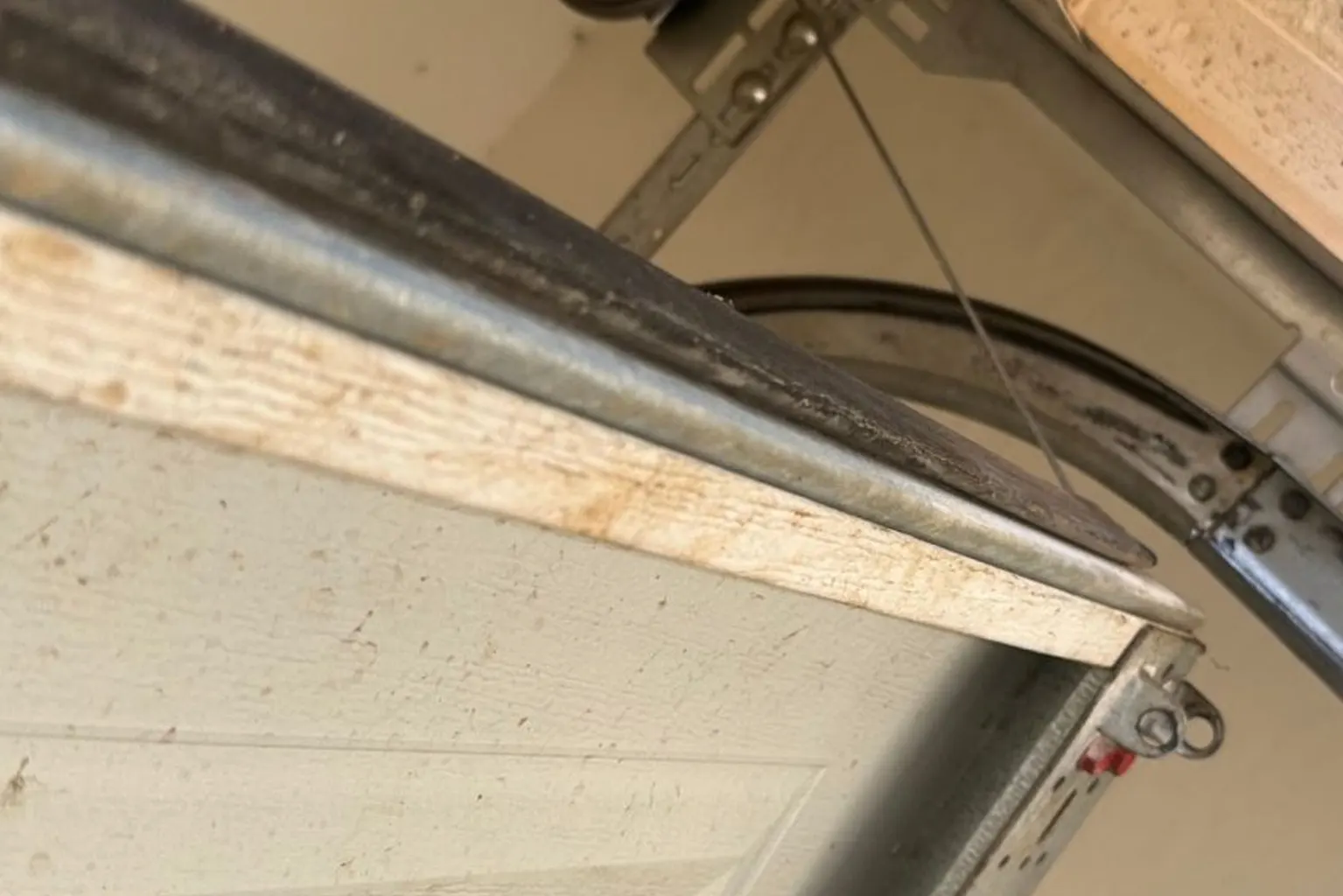
The first line of defense against Milwaukee's coldest air
Three zones: bottom seal at the threshold, side seals along both jambs, top seal at the header. All three replaced together when needed.
The bottom seal — the rubber, vinyl, or brush strip at the lowest panel's base — contacts the floor when the door closes. Blocks air infiltration, water, insects, and debris. The side seals run vertically along both jamb edges, stopping wind-driven air from cutting through the gap between the door's edge and the frame. The top seal closes the gap at the header.
The result is a door that closes completely. No cold air pushing under the bottom edge. No northwest winter wind slipping through the sides. In an attached Milwaukee garage, that difference shows up directly on the heating bill.
For doors that need broader insulation upgrade, see insulated garage doors. To bundle seal replacement with a full system check, see tune-up and maintenance.
Material Rated for −20°F — Not 32°F
Vinyl bottom seals stiffen and lose floor contact once garage temperatures push well below zero. They look fine in October. By January, they're rigid, lifted off the floor, and letting cold air through. EPDM rubber stays elastic to −40°F.
EPDM Rated to −40°F
Low-temperature rubber compound — specifically EPDM formulations that maintain elasticity to −40°F. Holds floor contact at every temperature Milwaukee actually records, not just typical autumn temperatures. Standard vinyl stiffens below −10°F and lifts off the floor; EPDM stays flexible.
Side & Top Matched
Foam or rubber bulb seals selected to compress against the jamb without splitting at below-zero temperatures. Top seal matched to the gap dimension of the specific door and frame — not a generic strip cut to fit. Corners mitered to close the gap at the junction with the bottom seal.
Channel Inspected First
Retaining channel inspected for deformation, fastener pullout, and alignment before any seal installation begins. Channel repair completed in the same visit when needed. A bent or separated channel cannot grip a new seal correctly — T-edge won't seat flush, first cold morning pulls the new seal in the same spot.
Full-Width Floor Test
Door cycled and closed against the floor. Light gaps checked at bottom, sides, and header. Bottom seal compresses and releases cleanly — no sticking, no drag, no pulling at the channel edges. Full contact across the bottom, not most of it. Verified before the visit closes.

"Nine times out of ten on a Milwaukee January call, the seal itself isn't the whole story."
I've opened a lot of garages where the retaining channel had already failed before I arrived — the homeowner just hadn't noticed yet.
The call usually goes like this: homeowner notices cold air coming in under the door, or sees daylight at the base when the door is closed. They assume the seal is just worn. They want a new one installed.
I pull up on the door and look at the bottom edge before I touch anything. What I find: the aluminum retaining channel — the track that holds the seal's T-shaped edge — has been bent outward or has partially separated from the door section. It happened on a prior freeze morning, probably months ago, when the door pulled against an ice-bonded seal.
The homeowner didn't notice because the old seal was still loosely in place. But the channel was already deformed.
The problem with skipping that inspection and going straight to a new seal: a bent or separated channel cannot grip the new seal correctly. The T-edge doesn't seat flush. The first time that door cycles against a cold floor again, the new seal pulls out in the same spot the old one did.
I check the channel before the new seal goes in. Every time. If the channel is deformed, I repair or replace it in the same visit. The new seal then seats the way it's supposed to.
That's a different job than swapping rubber. But it's the job that actually holds.
In Milwaukee, the real weather stripping problem starts at the threshold — where rubber meets concrete overnight
Snowmelt and condensation collect at the door's base during temperature transitions routine in a Wisconsin winter. That moisture sits between the bottom seal and the concrete.
When overnight temperatures fall into the low-to-mid 20s — a regular occurrence from December through February — the moisture freezes. The seal bonds to the floor.
This freeze-to-floor adhesion has two outcomes. In a light freeze, the opener pulls the door up, the seal tears free from the concrete, and the door opens. Seal intact. Floor bonding breaks. Problem resolved — temporarily.
In a hard freeze, the seal doesn't release from the floor. The opener's force transfers to the retaining channel, the aluminum track that holds the seal against the door panel. The channel pulls away from the panel. Or the seal's T-edge tears out of the channel entirely.
Now you have a full-width gap across the bottom of your door. Cold air, mice, and meltwater have an open path for the rest of winter. This is why fall scheduling matters — before the freeze season opens, not after the channel has already failed.
Service across West Allis, Brookfield, Menomonee Falls, and New Berlin during standard hours. Spring calls common after winter damage has been assessed and the full scope is clear.

Diagnostics, Material Selection, Installation, Verification
The sequence matters. Channel condition checked before any material is pulled out of the truck. EPDM rated for Milwaukee's actual range — not autumn weather. Door cycled and floor contact verified before the visit closes.
Diagnose
Retaining channel inspected before any material is selected. Threshold checked for evidence of freeze-to-floor adhesion: cracking at the outer edge of the concrete, smear marks on the seal's underside, visible separation between channel and panel. Findings communicated before installation begins.
Install Three Zones
If the channel is intact, new low-temperature rubber seal inserted and seated. If the channel is deformed, channel repair or replacement happens first. Side seals removed and new bulb seals measured, cut, fastened, and mitered. Header seal mounted with light compression against the top panel.
Verify
Door closed fully. Light gaps checked at bottom, sides, and header. Door opened and closed manually to confirm the bottom seal compresses and releases cleanly — no sticking, no drag, no pulling at the channel edges. Full contact across the bottom, not most of it. Visit not cleared until the seal seats correctly.
Cold air under the door, daylight at the base? Channel may already be compromised.
Waiting until the next hard freeze risks pulling the retaining channel off the door panel entirely — a costlier repair than addressing it now. Channel inspection happens before any new seal goes in.
Three Weather Seal Profiles Across the Milwaukee Metro
Same channel-first inspection across all three. Different starting points — pre-winter fall booking, post-winter damage assessment, or older garage where the channel needs addressing before the seal does.
Fall Replacement
Most common scheduling window — before the freeze season begins. Channel still intact, old seal worn but not torn, all three zones replaced proactively. EPDM rated to −40°F goes in. Seal holds through the full Wisconsin winter without freeze-to-floor damage.
Post-Winter Assessment
Cold air came in under the door all winter. Damage assessed in spring once the full scope is clear — channel deformation, T-edge tear-out, hardware fastener pullout. Channel repair first, then EPDM seal installed across the full width. Light gaps checked at bottom, sides, and header.
Channel First, Seal Second
Garages that have experienced even one hard freeze event are often showing channel damage the homeowner hasn't noticed. Channel may look fine from three feet away. Close look reveals slight outward bow or fastener pulled from the door section. Channel repaired or replaced before any new seal material goes in.
Frequently Asked Questions
Most weather stripping visits take one to two hours. Bottom seal jobs that require retaining channel repair add time but are completed in the same visit. A partially sealed door isn’t left behind — full contact verified across the bottom, sides, and header before the visit closes.
A bent or separated retaining channel cannot grip a new seal correctly. The T-edge won’t seat flush, and the first hard freeze pulls the new seal out in the same spot. Channel repair happens first — then the seal goes in. Installing a new seal over a damaged channel is a setup for the same failure repeating.
Yes, and winter timing matters. A torn seal creates an open path for cold air, water, and rodents. In Milwaukee, waiting until the next hard freeze risks pulling the retaining channel off the door panel entirely — a costlier repair than addressing the seal and channel together now.
Standard vinyl seals stiffen and lift off the floor below −10°F. EPDM rubber rated to −40°F holds floor contact at every temperature Milwaukee actually records. Vinyl looks fine in October. By January, it’s rigid, lifted off the floor, and letting cold air through. EPDM stays flexible.
Yes — all three zones replaced in a single visit when needed. Bottom, side, and top seals are assessed together because air infiltration from a worn header seal contributes just as much as a damaged bottom seal in older garages. Light gaps checked at all three zones before the visit closes.
Fall scheduling fills quickly as homeowners prepare for the freeze season. Spring calls are common after winter seal failures are discovered during post-season inspection. Either window works — the goal is replacing the seal and addressing any channel damage before it compounds across another winter.
Weather Stripping Across the Milwaukee Metro
Fall scheduling preferred for pre-freeze installation. Spring calls common after winter damage assessment. Mon–Thu and Sun 7AM–9PM, Fri 7AM–4PM. EPDM rubber rated to −40°F standard for every replacement.
Channel first, EPDM second, full-width contact verified.
Tell us what you're seeing — cold air under the door, visible gap, torn seal, channel pulled away. EPDM rated to −40°F arrives with the truck.
(414) 296-9783