
Garage Door Spring Tension Diagnosis and Repair in Milwaukee, WI
Both springs measured and cycle-rated before any work begins.
Door getting slower? Opener sounding strained? Spring showing visible cracking? Tension measured on both springs — not just the one that prompted the call. Written spec left with you before we touch a single component.


Most spring failures don't start with a snap — they start with accumulated fatigue.
By the time the door feels heavier or the opener sounds strained, the spring may already be operating at 60–70% of original tension.
That's still functional enough to open the door. It's not functional enough to protect the opener motor from the excess torque load, and not functional enough to survive an extended cold stretch without cracking.
If a spring has already snapped and the door is on the floor, see snapped torsion spring repair. If you want a scheduled replacement with upgraded cycle-rated hardware, see spring replacement.
This page covers what most homeowners actually experience: tension loss before complete failure. Tension measured. Cycle estimates written down. You see the numbers before any decision is made.
Four Variables Measured on Every Spring Call
Spring tension is measured — not estimated by appearance or reported symptoms. The four variables below get recorded on the service document and stay with the homeowner.
Tension Reading
Measured on both springs, not just the one that prompted the call. The balance test reveals whether tension loss is present and how severe it is — the door either holds position when released at mid-travel, or it doesn't. Numbers recorded before any work begins.
Wire Diameter
Confirmed against the door's actual weight rating. Mismatched wire gauge runs the spring outside its design parameters — either underpowered for the load or wound past safe tension. Recorded so any future technician knows exactly what's in the door.
Winding Direction
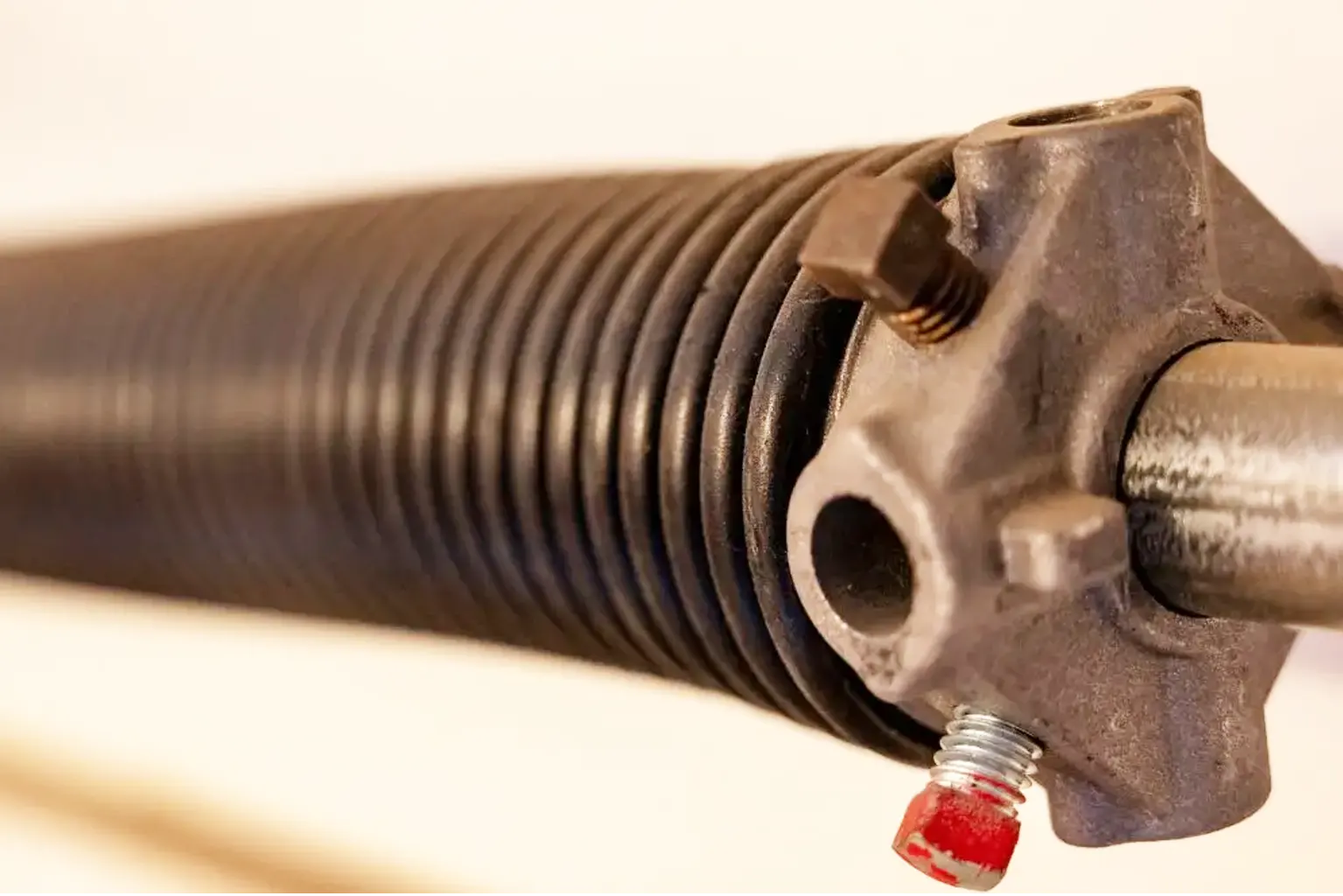
Whether each coil is left-wound or right-wound determines placement on the torsion bar. Verified before any replacement is ordered — springs spec-matched, not just sized approximately. Wrong winding direction puts the spring on the wrong side of the shaft.
Cycle Rating
Each spring's remaining cycle life estimated and written down. You decide whether to address one spring now or both before the second failure. The data is in front of you before any work begins — not after.
"What made this job instructive wasn't the right spring. It was the left one."
Riverwest, Tuesday morning, late February. Door was opening, but it had started taking noticeably longer to reach the top. She almost waited until spring.
I disconnected the opener and did the balance test — lifted the door manually to waist height and released it. A properly balanced door holds position. This one dropped steadily. Not fast, but consistently downward. That told me spring tension was significantly reduced before I touched a single tool.
I measured both springs. The right spring — the one she'd called about — had lost enough tension that it was contributing maybe half its rated load-carrying capacity. The left spring was intact visually, but tension measurement showed it was also running below spec.
Without a tension reading, a visual inspection would have cleared the left spring. It looked fine. The numbers said it had maybe 200 to 300 cycles of reliable life remaining — six to eight weeks at her usage. That's the difference between a repair call that fixes the problem and one that fixes it twice.
"Do I really need to look at both?" — the question we hear most often
The moment one spring stops contributing its rated load, the surviving spring is working beyond its design parameters.
A paired torsion spring system is engineered around equal load distribution. Both springs are wound to identical specifications. Each carries half the door weight on every cycle. When one fails — whether it cracks partially or loses tension gradually — the surviving spring doesn't carry the same load it was designed for. It carries the whole door.
The surviving spring doesn't immediately break under that load. But every cycle from that point forward accumulates wear faster than its cycle rating anticipated. Its failure timeline compresses significantly — depending on how long the door was operating on an unbalanced system before anyone noticed.
DiamondLift flags the surviving spring's condition on every repair visit and provides a written cycle estimate. You decide whether to address one spring now or both before the second failure happens at an inconvenient time. The data is in front of you before any work begins.

Measure, Repair, Verify — No Shortcuts Based on How Simple It Looks
Every spring call follows the same sequence regardless of how obvious or minor the failure looks. Five full open-and-close cycles before the job is cleared.
Tension Measured Before Anything Moves
Opener disconnected. Door tested manually. Tension measured on both springs and recorded. Wire diameter noted. Technician determines whether the issue is a partial crack (structural fracture in the coil) or pure tension loss without a visible break. Cables at the drums inspected for uneven wrap.
Matched-Spec Replacement
Replacement springs matched to wire diameter, inside diameter, winding direction, and cycle rating. If a cycle-rated upgrade is chosen, the upgrade is applied to both springs simultaneously so the pair stays matched. Wound to correct tension with verified torque reading.
Verification Before We Leave
Door runs through minimum five full open-and-close cycles. Balance test repeated. Opener force and limit settings confirmed within spec for the new tension profile — settings calibrated to a fatigued spring will be wrong on a fresh one. Full spring spec recorded on the service document.
Door feels heavier? Opener sounds strained? Get the numbers.
Tell us what the door is doing — slower than usual, opener sounds different, visible damage, or anything in between. Both springs measured. Specification goes home with you.
Three Spring Conditions We Find Most Often
Different symptoms, different fixes — tension measurement on both springs catches each one. The numbers tell us which condition is present before any work begins.
Tension Loss Without Cracking
Spring surface looks intact even when internal fatigue has advanced. Door drops in the balance test, but visual inspection misses it entirely. Common in pre-1990 single-car garages where steel has cycled through 30+ Wisconsin winters. Underlying metal fatigue doesn't reverse — replacement, not re-tensioning.
Partial Crack Before Complete Failure
Fracture partway through the coil that hasn't separated the spring yet. Structurally compromised — will complete the break under the next load. Cannot be re-tensioned safely. Operating the door on a cracked spring also overloads the opener motor and risks dropping the door if the opener trips.
Surviving Spring at End-of-Life
Called about one spring — tension measurement on the other shows 200 to 300 cycles of reliable life remaining. Six to eight weeks at typical use. The data shows up before any work begins so the homeowner decides: address one spring now, or both before the second failure on a cold morning.
Spring Repair Questions We Hear Most
Disconnect the opener and lift the door manually to waist height, then release it. A balanced door holds position. A door that drops has lost spring tension — even if the opener still runs the full cycle. DiamondLift’s tension measurement quantifies exactly how much each spring has degraded before any repair decision is made — no guesswork involved.
Yes, always. The paired spring has been absorbing extra load since the moment the first spring started failing. Measuring only the damaged spring leaves the surviving spring’s condition unknown. DiamondLift measures tension on both and provides a written cycle estimate for each. You decide whether to repair one or both — the numbers are yours before work starts.
Most torsion spring repairs take 60 to 90 minutes on-site from first balance test through final verification cycles. Jobs where both springs need replacement run toward the longer end of that window. DiamondLift carries matched spring sets for common Milwaukee-area door weights on the service vehicle, so parts delays are rare.
A partial crack is a structural fracture in the coil wire — the spring will complete the break under the next load and cannot be re-tensioned safely. A spring that has lost tension without cracking may theoretically be re-wound in some cases, but the underlying metal fatigue that caused the tension loss doesn’t reverse. DiamondLift will tell you which condition is present and what the honest repair path looks like for each.
The opener motor compensates for reduced spring assistance by drawing more current and running longer per cycle. This shortens motor life, can trip thermal overload protections, and in severe tension-loss cases can strip drive components. A spring repair that costs a few hundred dollars now can prevent an opener replacement that costs considerably more.
Torsion springs run horizontally above the door opening on a steel shaft. Extension springs run along the horizontal tracks on each side of the door and stretch as the door closes. Repair procedures differ substantially — torsion involves releasing and re-winding stored rotational energy; extension requires safety cables threaded through both springs before the door moves. DiamondLift identifies the system type on arrival and carries hardware for both.
Spring Diagnosis Across the Milwaukee Metro
Older homes in Riverwest, Bay View, and Washington Heights often have shallow header clearances and older track spacing. Newer construction in Brookfield (53045), New Berlin (53151), and Menomonee Falls (53051) runs standard torsion setups where matched-spec hardware is straightforward to source same-day.
Both springs measured. The specification goes home with you.
That's the standard on every DiamondLift spring call. Same-day availability across the Milwaukee metro — Mon–Sun.
(414) 296-9783