
Torsion Spring Spec Documented and Left With You After Every Service Visit
Wire diameter, inside diameter, cycle rating — recorded so your next tech has the data.
Spring specification, system diagnostics, and planned replacement — not emergency response. Wrong inside diameter or wrong wire size and the door works for eight months, then both cables fail the same week. Four specs measured directly. The Spring Documentation Record goes home with you.
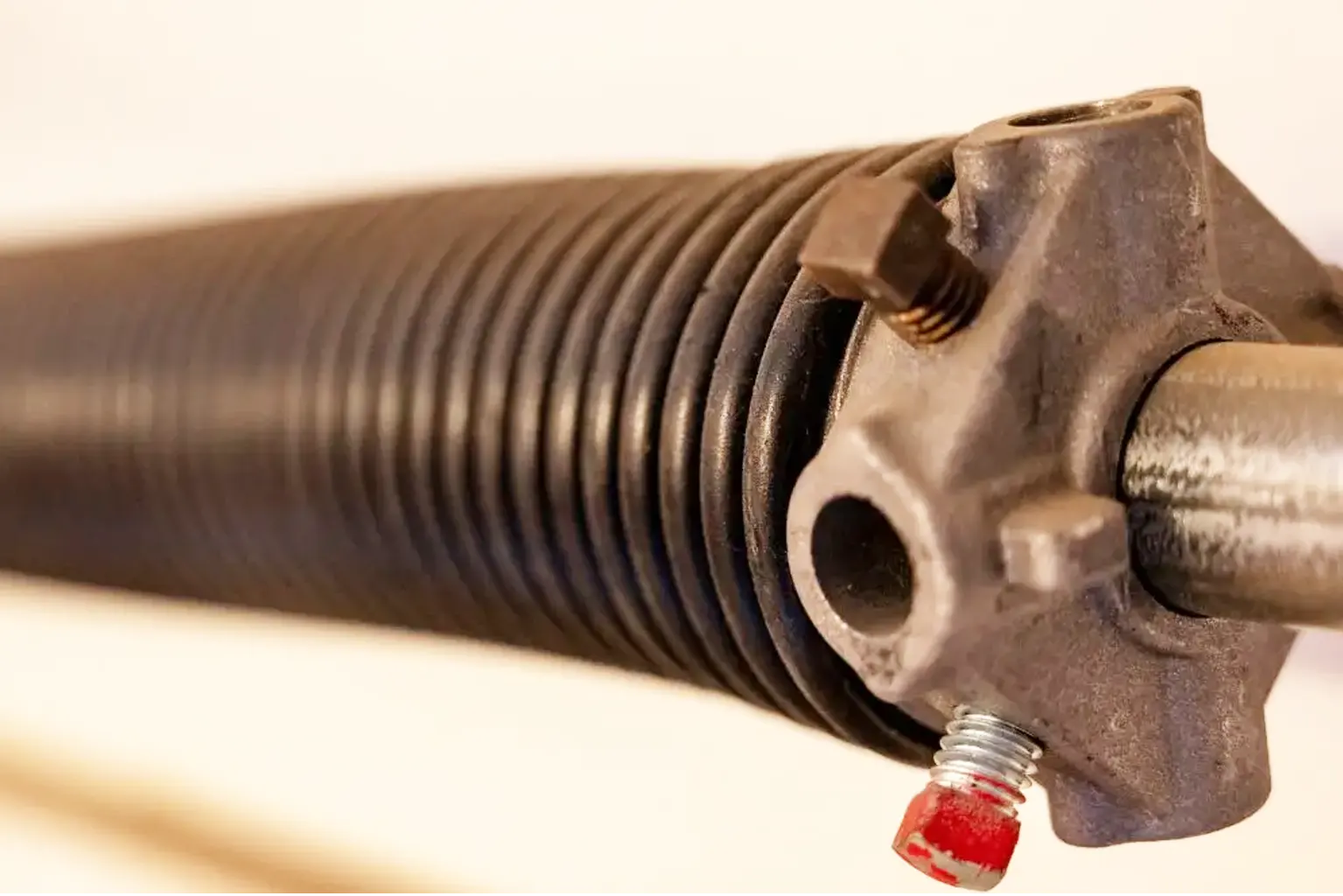

The mechanical heart of most Milwaukee garage doors installed after 1990
A coiled steel spring mounted horizontally on a shaft above the door. When the door closes, it twists and stores mechanical energy. When you open the door, that stored energy releases and does most of the lifting.
Without it, a 200-pound steel door would be dead weight. The torsion shaft runs the full width of the opening. Cables wind around drums at each end of the shaft as the door travels up. Spring, shaft, drums, cables — the whole assembly works together as a counterbalance mechanism. Pull one component out of spec and the rest shows it.
This page covers spring specification, system diagnostics, and planned replacement — not emergency response to a broken spring. If your spring has already separated under load, see snapped torsion spring repair. For older Milwaukee doors with a different mechanism entirely, see extension spring systems.
Many failures that look sudden were actually building over months. A spec-verified system, properly tensioned, gives you a predictable service life instead of an unexpected one.
Wire Diameter, Inside Diameter, Length, Winding Direction
Every torsion spring has four measurable specs. Each one controls something specific about how the spring performs. All four measured directly — not estimated from a visual.
Wire Diameter
Thickness of the coiled steel wire. Heavier wire means longer cycle life under the same door weight. Primary factor in upgrading to a high-cycle spring rated for 25,000–50,000 cycles instead of the standard 10,000. Wrong wire diameter means wrong cycle life for your door.
Inside Diameter
Hollow center measurement of the spring coil. Must match the torsion shaft diameter exactly. A spring with the wrong inside diameter won't seat correctly — it will bind, wobble, or fail to transfer torque evenly. Eight months of operation, then both cables fail the same week.
Spring Length
Total wound length of the spring. Determines how much torque the spring stores. Wrong length means wrong lift force for your specific door weight — the opener compensates silently for the shortfall until the motor reaches its load limit. Measured directly against panel count and material.
Winding Direction
Whether the spring winds left or right — set by which side of the door the cable drums sit on. A right-wound spring installed on the left side unwinds under load instead of storing it. Confirmed before any new spring is ordered.

"Wrong inside diameter, wrong wire size. The door worked for eight months and then both cables failed the same week."
Matching the spec isn't optional — it's why the system holds.
I've seen installs where someone grabbed the closest available spring off a shelf. The replacement looked about right. It went on the shaft. The door went up and down for eight months. Then both cables failed the same week because the spring had been sitting at the wrong tension profile that whole time, putting uneven load on the drums.
That's what wrong specs do. They don't produce an obvious failure on day one. They produce one on month eight. Wire diameter, inside diameter, length, winding direction — all four get measured directly on every visit. Not estimated from a visual.
I record those four specs on every torsion spring system we service. The Spring Documentation Record goes home with the homeowner after every install or replacement. The next technician — whether it's us in three years or someone else in thirteen — pulls the exact replacement spec without remeasuring from scratch.
The math on high-cycle is straightforward. A Milwaukee household that opens its garage door four times a day hits 1,460 cycles a year. A standard spring reaches end of life around year seven. A high-cycle spring at 25,000 cycles gives the same household 17 years under the same conditions. We quote the upgrade alongside standard on every replacement visit. You see both numbers and make the call — not a sales pitch, the cycle math for your specific household.
Heavier-gauge wire rated for 25,000 to 50,000 cycles — not the standard 10,000
For households with attached garages used as a primary entry point, the upgrade pays for itself in avoided emergency replacement calls.
Most of the western Milwaukee suburbs from Wauwatosa through Brookfield and into Waukesha fall into this profile — attached garages, primary entry use, four-plus cycles per day. Standard spring at 10,000 cycles reaches end of life around year seven. High-cycle at 25,000 cycles gives the same household 17 years.
The high-cycle option is quoted alongside standard replacement on every torsion spring service visit. You see both numbers and make the call. Cycle math shown for your specific household — not a sales pitch.
The winding cone is the cone-shaped fitting at each end of the spring where winding bars are inserted to add or release tension. Winding a torsion spring is a two-handed job under high tension. It requires trained technique to do safely. The process is no different for a high-cycle spring than a standard one. The cost difference is in the spring itself.
Milwaukee's climate adds another variable. Thermal cycling and salt exposure accelerate wear on both the wire and the winding cone fittings. Spec selection accounts for it. The Spring Documentation Record carries it forward to the next visit.

Diagnose, Install and Tension, Test and Document
Defined sequence on every visit. Door weight estimated from panel count. Tension added in quarter-turn increments with calibrated winding bars — not power tools. Spring Documentation Record handed over before sign-off.
Diagnose
Door in closed position. Weight estimated from panel count and material. Existing spring measured for wire diameter, inside diameter, length, and winding direction. End-bearing plates, drums, and cables inspected for wear. Cycle rating estimated from wire diameter and install date when available.
Install & Tension
Replacement matched to documented spec. High-cycle option quoted alongside standard before ordering. Spring installed on torsion shaft, winding cone engaged, tension added in quarter-turn increments using calibrated winding bars. Tension verified against the door's balance point — not by feel alone.
Test & Document
Door cycled manually five times before opener reconnect. Balance test: a correctly tensioned torsion spring holds the door at six inches without drifting. Opener reconnected, travel limits confirmed, door cycled three additional times under power. Spring Documentation Record handed to homeowner before sign-off.
Door making noise but not broken yet? Spec the system before it fails on its own schedule.
Visible coil gaps, uneven winding tension, or surface pitting — signs the spring is approaching failure, not just aging normally. Inspection, written assessment, and documentation in one visit.
Three Torsion Spring Configurations Across the Milwaukee Metro
Same four-spec measurement and same Documentation Record across all three. Different starting points — residential single-spring, commercial dual-spring, or undocumented system getting its first Spring Documentation Record.
Brown Deer, West Allis, Bay View
Single-spring systems in 53223, 53214, and 53207. Standard residential door, four cycles a day, 1,460 cycles a year. Standard spring reaches end of life around year seven. High-cycle option quoted alongside standard — homeowner sees both numbers and the cycle math for their actual usage.
Menomonee Falls to Waukesha
Dual-spring commercial configurations across Menomonee Falls, Brookfield, New Berlin, and Waukesha. Heavier doors, higher cycle counts, paired-spring load balance verified during installation. Both springs measured. Both spec records documented and left with the property manager.
Never Been Spec'd
Doors that have never had a spec record — original springs from the 1990s or early 2000s, no install paperwork, no service history. Four specs measured from the existing spring. Cycle rating estimated from wire diameter and install date when available. The Documentation Record carries the system forward from this point on.
Frequently Asked Questions
Most torsion spring replacements take 60 to 90 minutes on-site. Diagnostic measurement, spring installation, tensioning, and a full balance test are all done in the same visit. The Spring Documentation Record is completed before the technician leaves. No return trip is needed for standard residential or commercial dual-spring configurations.
Wrong specs cause real failures. A spring with the wrong inside diameter won’t seat on the shaft correctly. Wrong wire diameter means wrong cycle life for your door’s weight. Wire diameter, inside diameter, length, and winding direction all measured directly — not estimated from a visual. That’s how a replacement spring performs correctly from the first cycle.
A standard torsion spring is rated for 10,000 cycles. A high-cycle spring is rated for 25,000–50,000 cycles using heavier-gauge wire. For a Milwaukee home opened four times daily, a high-cycle spring lasts roughly 17 years versus 7 for standard. The cycle math for your specific household is shown so the decision is based on your actual usage, not a sales pitch.
Wire diameter, inside diameter, spring length, winding direction, and cycle rating. The document is yours to keep. The next technician — from DiamondLift or anyone else — can pull an exact-match replacement without remeasuring from scratch. Standard part of every torsion spring service visit.
Visible coil gaps, uneven winding tension, or surface rust are signs a spring is approaching failure — not just aging normally. A noisy spring also showing surface pitting is under more stress than a clean spring. The existing spring’s condition is inspected before any replacement is recommended. If it’s fatigued but not failed, that finding goes into a written assessment so you decide with full information.
Standard residential systems typically run $150–$350. Range shifts based on wire diameter, whether you upgrade to high-cycle, and whether the shaft or end-bearing plates need attention. Both standard and high-cycle options quoted on every visit so you see the price difference before deciding. The high-cycle upgrade often pays for itself within two replacement cycles.
Torsion Spring Service Across the Milwaukee Metro
From lakefront zip codes through the western suburbs and out into Waukesha County. Mon–Thu and Sun 7AM–9PM, Fri 7AM–4PM. Same four-spec measurement and Spring Documentation Record on every visit.
Replacement, high-cycle upgrade, or first-time spec record — one visit.
Four specs measured, both standard and high-cycle quoted, tension verified against balance point, Spring Documentation Record left with you.
(414) 296-9783