
Safety Cable Installation / Upgrade for Extension Spring Garages
Pre-1990 single-car garages in West Allis and Brown Deer — we know these systems.
A safety cable is a steel cable threaded through an extension spring to contain it if it breaks. Without a cable, a snapped spring can swing laterally at significant speed. With one, it stays threaded on the cable and stops where it is. Hardware on every truck — cables installed in the same visit if they're missing.


Why extension spring systems in older Milwaukee garages need containment cables
A safety cable does nothing while the spring is intact. The moment a spring snaps, the cable holds it in place rather than letting it swing freely across the garage.
The spring is already under tension when the door is closed. When it breaks, that stored energy has to go somewhere. Without a containment cable, the broken spring can swing laterally at significant speed. With one, it stays threaded on the cable and stops where it is.
Each cable anchors at two points: the front hanger bracket and the rear track bracket. Both carry the containment load when the spring lets go. That's why anchor condition matters as much as the cable itself.
For broader spring service context, see extension spring systems explained and garage door spring repair. Homeowners who want whole-system confidence can also schedule a safety inspection and certification.
Four Standards That Define a Cable Install Done Right
Cable spec matched to spring size. Both anchor points inspected before install. Cable tensioned correctly. Six-cycle door test before sign-off — the cable is only as reliable as the points holding it.
Spec Matched to Spring
Cable diameter and length matched to the specific spring on your door — not a single universal cable applied to all systems. Sizing is part of the diagnostic, not an assumption. Hardware carried on every vehicle so the right cable is on hand when missing cables are found mid-visit.
Both Anchors Inspected
Front hanger bracket and rear track bracket checked for integrity and load rating before the cable goes in. If a bracket isn't rated to hold the containment load, it's replaced at the same visit. Not an add-on — the only way the cable functions as intended.
Tension Set Correctly
Loose cables don't contain a spring snap effectively. A cable routed incorrectly can bind during normal door travel. Tension set so the cable is taut but doesn't interfere with spring travel. Length and routing verified before the door is cycled.
Six-Cycle Door Test
Six cycles minimum after installation — confirming the cable doesn't bind during travel and that both anchor points hold under load. If a bracket shifts or a cable binds during the test, it's corrected before the crew leaves. Door isn't cleared until the full test passes.

"One side had a cable threaded through it. The other didn't. The homeowner had no idea."
Menomonee Falls call last fall. Door slowed down noticeably; they thought the opener was failing. House built in 1978, single-car attached, original extension spring system on both sides.
When I looked at the horizontal track, I could see the springs immediately. One side had a cable threaded through it. The other didn't. Someone had replaced one spring at some point and installed a cable with it. The other spring was original — no cable, no retrofit.
That asymmetry is common. A partial repair years ago, done right on one side and not the other. Hardware on the truck. I replaced the aging spring on the side without a cable, installed the containment cable, and checked both anchor points — the front hanger bracket and the rear track bracket — to confirm they'd hold the containment load.
I also inspected the existing cable on the other side. The cable itself was fine. The rear track bracket anchor was slightly loose. I re-secured it while I was there. The whole addition took about 25 minutes after the spring work. Six cycles before sign-off, both cables tensioned and anchored.
The value of a containment cable is simple: an extension spring snap happens without warning. The cable is the only thing that stops it. Leaving that visit without the cable installed isn't something we do.
Your anchor points are checked, not assumed
Some homeowners ask whether they can thread a cable through themselves. Threading isn't complicated. The cable is only as reliable as the points holding it.
A rear track bracket pulling away from the header, or a front hanger bracket that's cracked or undersized, won't contain a snapped spring the way the installation is designed to. Threading the cable is only part of the job — the anchor points are where the containment load actually lands.
Both anchor points checked on every safety cable install and upgrade. If a bracket isn't rated to hold the containment load, it gets replaced at the same visit. Not an add-on. The only way the cable functions as intended.
Cable length and routing also verified. A cable too loose doesn't contain a spring snap effectively. A cable routed incorrectly can bind during normal door travel. Both set before leaving, then the door cycled six times to confirm there's no interference.
Pre-1990 garage door hardware frequently came without safety cables, and many of those cables were never added during subsequent repairs. Repeated freeze-thaw cycling and Wisconsin temperature swings put additional fatigue stress on uncontained spring systems — the risk compounds with time.
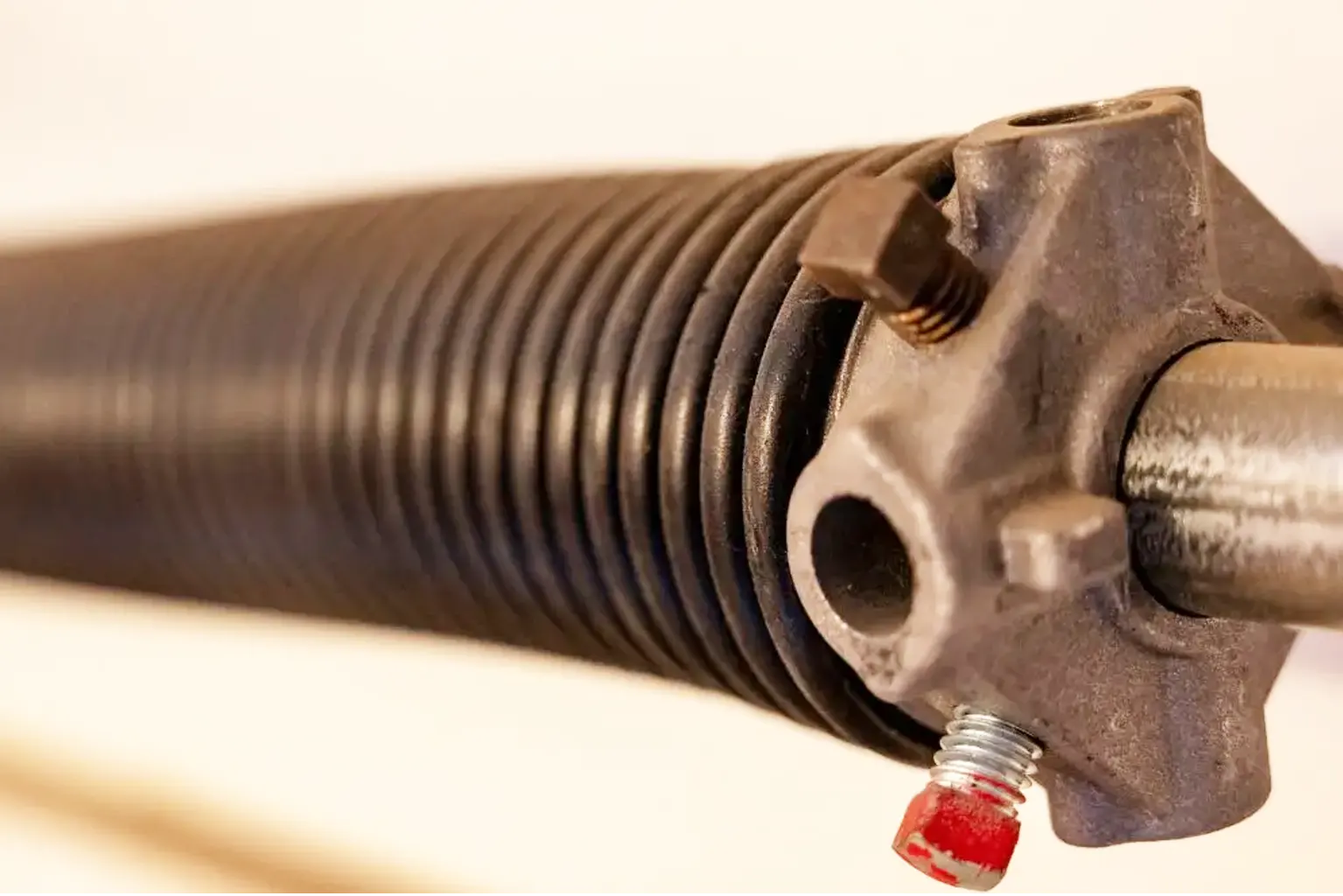
Diagnostics, Implementation, Six-Cycle Test — Both Sides, Same Visit
Cables aren't installed on one side and the other left uncontained. The full system is brought to spec, both anchors verified, and the door cycled six times before the job is cleared.
Visual Diagnostic
Visit starts with a visual inspection of the full extension spring system. Both springs checked for wear, fatigue, deformation. Cable presence confirmed on each side. Existing cables checked for fraying, corrosion, improper routing — both anchor points inspected for secure mounting and correct load rating.
Both Sides Threaded
Cable threaded through the spring center from the front hanger bracket to the rear track bracket. Both anchor points secured to the correct torque. Tension set so the cable is taut but doesn't interfere with spring travel. Brackets requiring replacement or reinforcement handled at this stage. Process completed on both sides.
Six-Cycle Verify
Six full cycles after installation. Watching for cable binding, checking that anchor points hold under the load of door movement, confirming spring travel is unobstructed. Cable routing verified clear of adjacent hardware. If anything shifts during the test — bracket moves, cable binds — it's addressed before sign-off.
Already booked another spring service? Confirm the cables while we're there.
Hardware on every truck. Labor folded into the visit already scheduled. If cables are missing, they're installed before we leave — no second appointment, no separate service charge for the install itself.
Three Patterns Where Safety Cables Are Most Often Missing
Bay View bungalows. West Allis ranches. Brown Deer split-levels. The same single-car attached or detached configurations show up in these neighborhoods with extension springs that have never been cabled.
Original Detached Garages
Bay View bungalows with original detached single-car garages. Extension springs from the original install. Cables never added. Safety cable retrofit handled in the same visit as any spring service — both anchors inspected and brackets replaced if load rating doesn't hold.
Single-Car Attached Along 76th
Ranch-style neighborhoods along 76th Street in West Allis (53214, 53219). Single-car attached garages with extension springs that have never been cabled. Asymmetric retrofits common — one cable from a past repair, the other side still uncontained. Both sides brought to spec in the same visit.
North of Good Hope Road
Split-levels north of Good Hope Road in Brown Deer (53223). Spring system hasn't been touched in decades. Pre-1990 hardware came without cables, and most were never retrofitted during subsequent repairs. Spring fatigue and an uncontained system together mean a more urgent retrofit.
Frequently Asked Questions
Safety cable installation is included in the same visit — no separate service charge for the installation itself. Cable hardware carried on every vehicle. If cables are missing during a spring repair or tune-up, they’re installed before leaving. You pay for the hardware; the labor is folded into the visit already scheduled.
Adding safety cables to both sides of an extension spring system takes roughly 20-30 minutes. Includes threading, anchoring both ends, setting cable tension, and cycling the door six times to confirm no binding. Most visits where cables are missing wrap up with the cables fully installed and tested before the crew leaves.
Threading a cable is straightforward. Confirming the anchor points can hold the containment load is not. A loose rear track bracket or an undersized front hanger bracket won’t stop a snapped spring. Both anchor points are inspected before installation and any bracket that won’t hold is replaced. The cable is only reliable if its anchors are solid.
Yes — both sides require containment cables. A single unprotected extension spring is still a hazard. Older Milwaukee garages often show exactly this pattern: one cable from a past repair, one side left uncontained. Cables are installed on both sides in the same visit.
Extension springs run horizontally along the ceiling track above each side of the door — not across the top like a torsion spring. If your single-car door has two springs running parallel to the ceiling tracks, those are extension springs. If you’re unsure, the spring type is confirmed on arrival and cable presence is checked immediately.
Most cable installs stop at threading and anchoring. DiamondLift adds anchor-point inspection, bracket replacement if needed, tension setting, and a six-cycle door test before sign-off. If anything shifts during the test — a bracket moves, a cable binds — it’s corrected before the crew leaves. The door isn’t cleared until the full test passes.
Where DiamondLift Dispatches for Safety Cable Work
Particular concentration in the older single-car garage neighborhoods where uncontained extension springs are most common — Bay View, West Allis (53214, 53219), Brown Deer (53223), Menomonee Falls.
Same visit. Both sides. No second appointment.
Already booking a spring repair, tune-up, or any other service? Let us know you want the cables confirmed. We'll check and install them while we're there.
(414) 296-9783