
Garage Door Opener Installation in Milwaukee, WI
Calibrated to your door's actual weight and garage layout — not a default from a price list.
Complete mounting, wiring, limit calibration, and force adjustment — matched to Milwaukee's climate demands. Door weight measured before drive type and horsepower are selected. Five full cycles confirmed before we leave.


The opener brand matters less than the decisions made before the box leaves the truck.
Drive type chosen from a price list. Horsepower spec'd at the minimum. WiFi signal never checked at the ceiling mount. The consequences show up two winters later.
Milwaukee's unheated garages reach conditions that expose poor drive type selection quickly. Standard screw-drive lubricants lose performance below roughly −10°F. Milwaukee unheated garages regularly hit −15°F to −20°F during January cold snaps. The opener doesn't fail immediately — it slows, strains, and shortens the motor's service life one cold morning at a time.
Horsepower carries a similar pattern. An insulated double-car door typically weighs 200–400 lbs. Run that on a 1/2 HP unit and the motor operates near the top of its duty cycle on every open. Heat builds across thousands of cycles. Service life shortens.
Neither problem is visible on installation day. Both are avoidable if the assessment happens before the unit is selected. See the full range of residential opener options matched to garage type.
Four Variables Confirmed Before the Opener Box Leaves the Truck
Door weight, drive type, horsepower rating, and WiFi signal at the mount location — each one consequential, each one checked on every install. Default product picks fail two winters later.
Door Weight
Measured before drive type and horsepower are selected. Hollow-core single-car: 130–150 lbs. Insulated double-car: 200–400 lbs. Wrong-spec horsepower runs the motor near the top of its duty cycle on every cycle — heat builds, service life shortens.
Drive Type
Belt for attached garages with living space above. Chain for detached. Screw drive only in climate-controlled spaces. Selection responds to actual garage layout — attached vs. detached, heated vs. unheated — not a default product pick.
Horsepower Rating
Standard residential doors: 1/2 HP. Insulated double-car or heavier custom doors may require 3/4 HP or 1 HP to stay within the opener's designed duty cycle without overloading the motor. Spec comes from the measurement, not the lowest available option.
WiFi Signal at Mount Location
Signal that's strong at the wall can drop significantly 20 feet up and 30 feet away from the nearest access point. Verified at the ceiling mount before committing to a smart unit. If marginal, a mesh node enters the conversation before install day — not after.
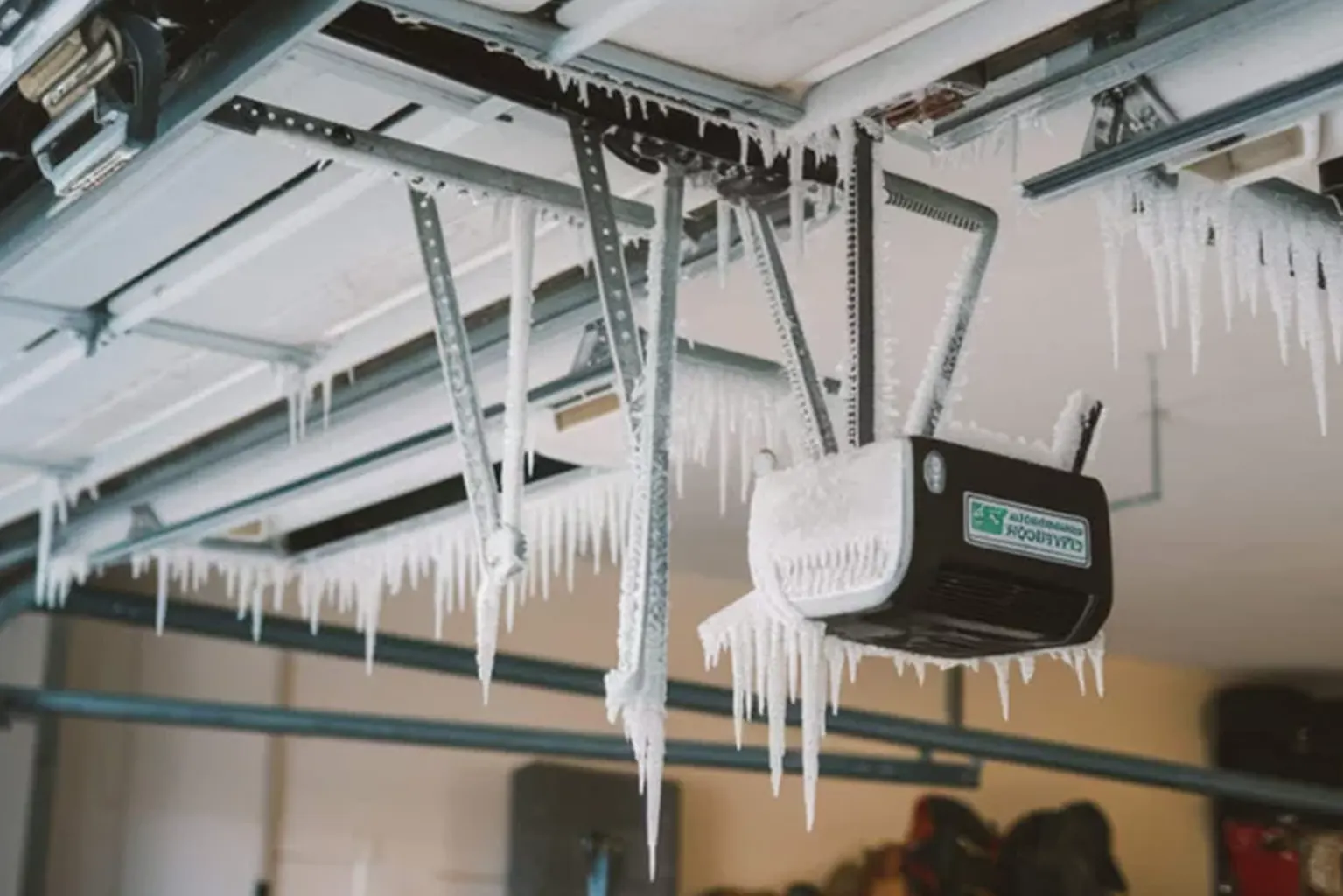
"The lubricant had turned thick — almost paste-like. The motor had been running against that resistance every cold morning."
Oconomowoc, last February. Homeowner had replaced their opener the previous spring — went with a screw drive because the price was right and the install looked clean.
By January they were calling about a door that took 90 seconds to open and made a grinding moan on cold mornings. I pulled the opener and looked at the threaded rod. Standard lubricant formulation, not rated below −5°F. Their unheated garage had been sitting at −18°F overnight.
We replaced the unit with a belt drive and a cold-rated backup battery. The homeowner asked why the temperature rating hadn't come up during the original install conversation.
My honest answer: drive type selection requires knowing the garage configuration before the unit is chosen. I measure door weight, check whether the space is heated, look at where living spaces sit relative to the garage — and then we decide on drive type and horsepower together. That conversation happens before any equipment is ordered. The belt drive in that Oconomowoc garage has run through two full Wisconsin winters without a complaint.
WiFi signal at the ceiling mount — the detail that gets overlooked
The opener mounts near the ceiling, often at the far end of the garage from the house router. Signal that's strong at the wall can drop significantly up there.
Smart compatibility connects the opener to home WiFi for app control. LiftMaster and Chamberlain units with myQ allow remote operation — useful for delivery access, rental properties, and confirming the garage is closed before leaving.
One factor that gets missed: WiFi signal strength 20 feet up and 30 feet away from the nearest access point. DiamondLift checks signal at the actual mount location before committing to a smart unit. If marginal, a mesh node or extender enters the conversation before installation day — not after.
Backup battery is worth confirming on every smart install. Milwaukee loses power during ice storms. An opener without battery backup stays closed during an outage — and smart features go offline with it.
Assess, Mount, Calibrate — All in One Visit
Door weight measured before drive type is chosen. Wiring run clean and weatherproofed. Limit calibration and force adjustment set to UL 325. Five full cycles before the homeowner walkthrough.

Door Assessment & Drive Selection
Crew starts with the door, not the opener box. Door weight measured by disconnecting the existing opener and checking the six-inch balance position. A door that drifts down needs spring adjustment first. Ceiling clearance, header height, and thermal environment noted before equipment leaves the truck.

Mounting & Wiring
Opener rail assembled and ceiling-mounted at correct header clearance. Drive unit attached. Wiring run to wall button, keypad, and sensors. Sensor brackets mounted four to six inches above the floor, parallel within 1/4 inch. No exposed runs. Connections weatherproofed.
Calibration & Walkthrough
Limit calibration sets exact open/close stops. Force adjustment set to UL 325 — completes travel against normal resistance, reverses on a 2x4 placed flat on the floor. Five full cycles run. Remotes paired live, keypad set, app connected, backup battery confirmed before the crew leaves.
No second trips. No surprises on installation day.
Tell us your garage type — attached or detached, single or double car — and we'll arrive ready with the right unit. Drive type and horsepower selected after measuring your door, not before.
Three Drive Types — Three Right Answers, Three Wrong Ones
Each drive type fits a specific garage configuration. Milwaukee's winters make the match consequential. Picked from a price list, all three can fail in their own way.
Belt Drive — Attached Garages
Reinforced rubber belt absorbs vibration rather than transmitting it through the structure. Preferred for attached garages with living spaces above or beside the garage. No temperature-sensitive lubricant — full Milwaukee range reliable. Common pick in Brookfield and Menomonee Falls new builds.
Chain Drive — Detached Garages
Most durable, lowest upfront cost. Tradeoff is noise — metal-on-metal vibration carries through structure. In a detached garage, that tradeoff disappears entirely. Performs at −20°F without lubricant complications — meaningful in Wisconsin's unheated outbuildings.
Screw Drive — Climate-Controlled Only
Moderate noise, fewer moving parts. Standard lubricants lose viscosity below −10°F — unheated Milwaukee garages regularly hit −18°F. Appropriate only in climate-controlled spaces or with verified cold-rated lubricant specified before installation.
Frequently Asked Questions
Pricing depends on drive type and horsepower rating. Belt drive units cost more upfront than chain drive but last longer in attached garages. Screw drive is mid-range but not recommended for unheated Milwaukee garages without cold-rated lubricant. Contact DiamondLift at (414) 296-9783 for a specific quote based on your door and garage configuration.
Belt drive is the right choice for attached garages with living spaces above or beside. Chain drive fits detached garages where noise isn’t a concern. Screw drive requires a climate-controlled space — standard lubricants lose viscosity below −10°F, and unheated Milwaukee garages regularly reach −18°F in January.
Most installations are completed in a single visit of two to four hours. That includes mounting, wiring, limit calibration, force adjustment, sensor alignment, and a full homeowner walkthrough. No second trip is needed for remote pairing or app setup — those are finished before the crew leaves.
Start with a diagnostic visit before committing to a new unit. If the motor runs but the door misbehaves, the issue may be limit calibration or force adjustment — not the opener itself. If the logic board or drive mechanism has failed, replacement is the more cost-effective path. DiamondLift diagnoses before recommending.
Calibration covers two settings: limit adjustment and force adjustment. Limits control exactly how far the door travels in each direction — set incorrectly, the door reverses before closing or leaves a gap at the floor. Force adjustment determines how much resistance the motor pushes against before stopping or reversing. Both set to UL 325 standard. Five full cycles run before the job is closed.
Yes — an unbalanced door must be corrected before any opener is mounted. A door that drifts down when disconnected loads the new motor unevenly on every cycle and shortens its service life. DiamondLift checks door balance on arrival and addresses spring tension before mounting the unit.
Opener Installation Across the Milwaukee Metro
Bay View and Riverwest to the Near West Side, plus West Allis, Brookfield, Brown Deer, Menomonee Falls, New Berlin, Waukesha, and Oconomowoc. ZIP codes 53202, 53207, 53214, and 53051 within regular dispatch.
Drive type matched to your door and garage. Installed completely in one visit.
Tell us your garage type — attached or detached, single or double car — and we'll arrive ready with the right unit. No surprises on installation day.
(414) 296-9783