
One Emergency Repair Bill Is Enough — A Maintenance Program Prevents the Next One
Visit frequency set to your door's actual use pattern and seasonal exposure.
Recurring service agreement — scheduled visits to inspect, lubricate, adjust, and document every system component before failures develop. Every finding travels forward in a carry-forward service record. The next technician already knows what was measured last time. That's the version of maintenance that prevents the second emergency.


A single tune-up helps. But it's a point-in-time fix — it doesn't follow up.
A program is different. The difference is the record.
Built for Milwaukee homeowners who've already been through one breakdown. You know what that costs — the morning your car was stuck, the 7 AM emergency call, the day rearranged around a door that picked the worst possible moment.
After that, most homeowners want a way to prevent the next one — they just don't know what interval makes sense or how to get on a schedule that actually sticks.
Every finding travels forward. The next technician who arrives already knows what was measured last time. Spring tension last fall, roller bearing condition last spring, weatherseal compression at the previous visit — all logged, all compared, all visible to both you and the technician.
For a single-visit reset, see one-time tune-up and maintenance. For commercial properties, see commercial maintenance contracts.
Four Standards That Hold on Every Program Visit
Carry-forward record, calibrated interval, full-system check, component progression tracking. Every visit covers springs, hardware, opener, seals, and balance — not just the parts that look like they need attention.
Carry-Forward Record
Written log maintained across visits recording the condition rating of every inspected component. Each future visit compares current readings against prior ones. Spring tension percentages, roller bearing condition, opener force limits, weatherseal compression — all logged.
Calibrated Interval
Visit frequency set to your actual door — not a one-size-fits-all calendar. Daily cycle count, spring age, opener brand, garage configuration. Annual may suit a retired couple in Brookfield with a single-car. Semi-annual is right for a family in Menomonee Falls cycling a heavy double door ten times daily.
Full System Check
Springs, hardware, opener, seals, balance. Spring tension measured with a gauge, not estimated by feel. Roller bearings checked by hand rotation. Opener force tested against a standard resistance load. Track gap measured along the full length. Lubrication applied in the correct sequence.
Component Progression
Re-measuring aging components at each visit and comparing the result to the prior visit's reading. How early-replacement candidates get identified before they fail. A spring at 81% isn't a failure. A spring that dropped from 94% to 81% in five months is a trend worth acting on.
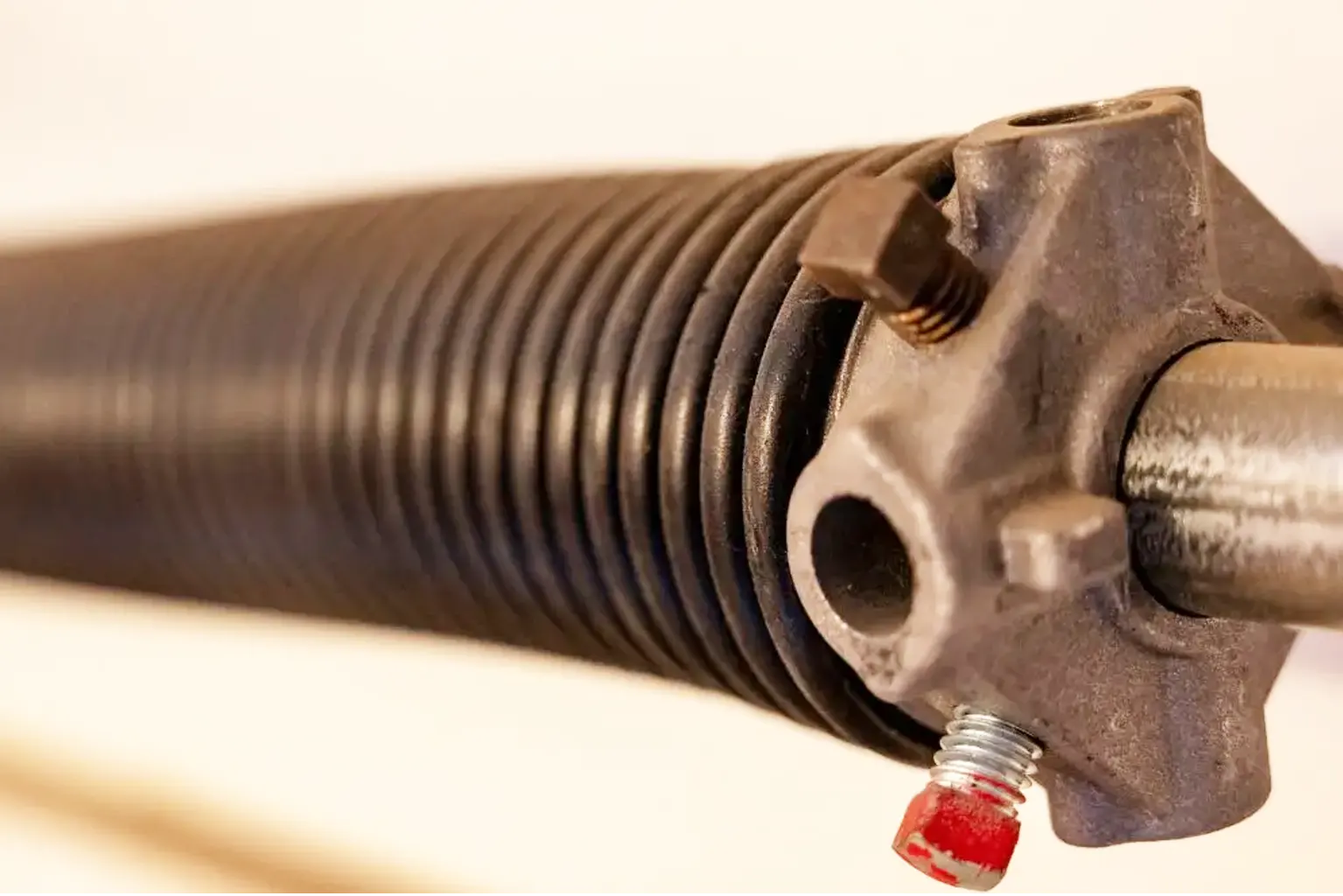
"94% in the fall. 81% in the spring. Thirteen points in five months."
Waukesha semi-annual visit, late April. The homeowner had enrolled after an emergency the previous January — torsion spring snap, cold morning, two-car door, middle of the week.
After we replaced it, he asked me straight: how do I make sure this doesn't happen again? Enrolled him in the semi-annual program. The fall visit was a solid door — everything measured within spec, new spring tension confirmed, hardware lubricated, balance test passed.
I noted the spring tension reading in his carry-forward service record. The April visit is where the record paid off.
Spring tension had dropped from 94% of rated spec to 81%. Thirteen points in five months. That's not failure. But it's a trajectory. I showed him the two numbers side by side — fall measurement, spring measurement. At this rate, the spring would likely reach 65% of spec before the next scheduled fall visit.
He made the call to replace it early. No emergency. No stuck car. No 6 AM phone call.
Without the record, I would have called the spring "adequate" at 81% and moved on. With it, both of us could see where it was going. That's the direct value of the carry-forward record — it turns a single-visit inspection into a multi-visit trend.
What five months of Milwaukee winters do to a garage door system
Concentrated, cumulative, component-specific — and shows up differently depending on door age and daily use.
Road brine application along Milwaukee County roads typically runs late October through early March. It's not the cold itself — it's the repeated transition. Springs that contract overnight and re-expand by midday accumulate micro-fatigue at the coil surface. Roller bearings that were lubricated in September run dry by January because standard lubricant thickens or migrates in sustained sub-zero temperatures.
Bottom seals contacting frost-heaved concrete in Waukesha or West Allis driveways compress unevenly and lose seating. By April, a door that tested fine the previous September has often shed 10 to 15 percentage points of spring tension, accumulated play in two or three roller bearings, and developed a seal gap that lets cold air in at floor level.
None of those changes announce themselves. They accumulate between visits. That's the failure pattern a maintenance program built for this region is designed to intercept — not just before the spring snaps, but before the bearing seizes or the seal crack becomes a rot problem at the base of the door frame.
The visit cadence here is calibrated around that failure timeline, not a generic national recommendation.
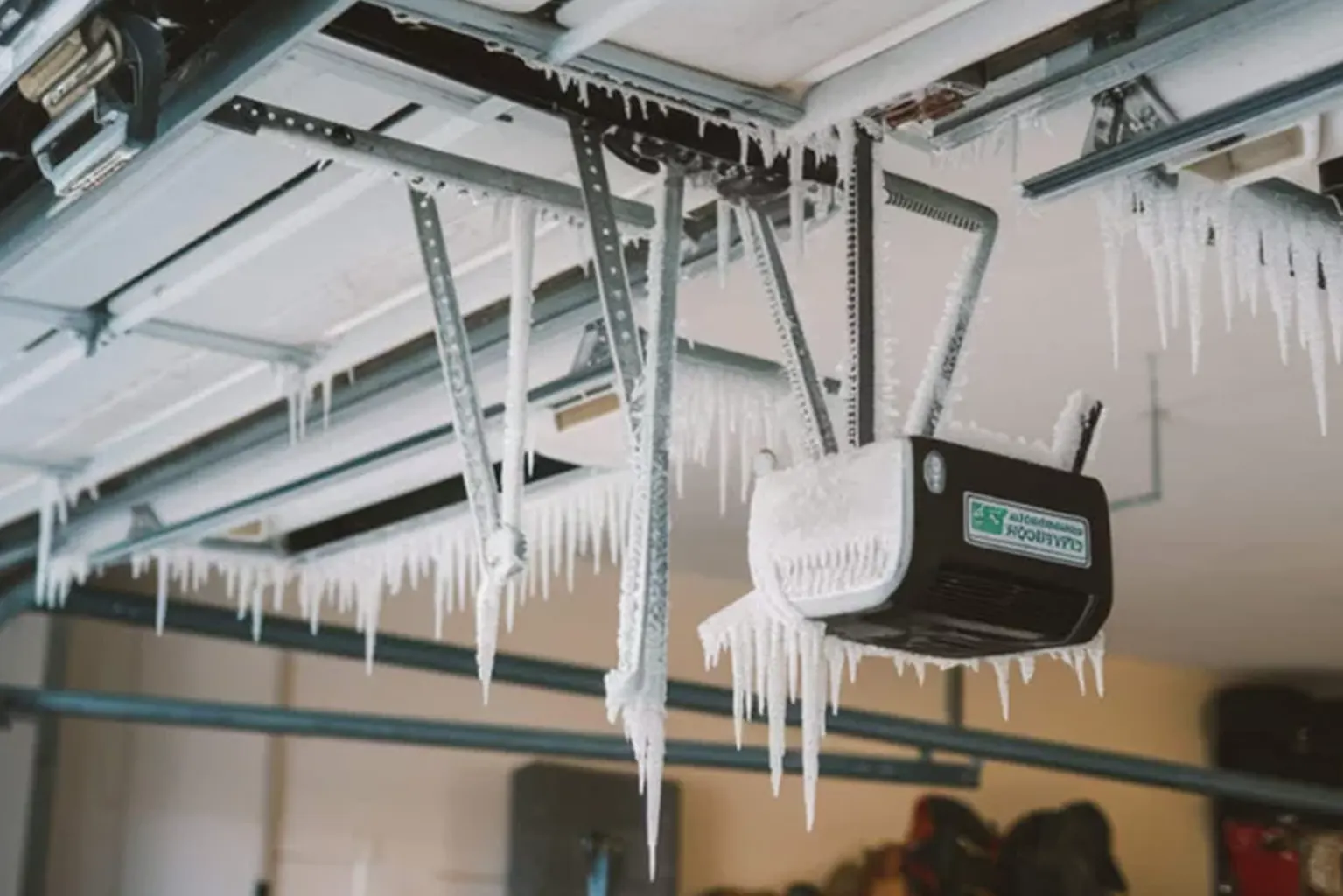
Open Record, Inspect & Adjust, Update & Sign Off
Every visit follows the same defined sequence. The record opens before the door is touched. Components flagged at the prior visit are checked first — not a fresh start each time.
Open the Record
Technician opens your carry-forward service record before touching the door. Components flagged at the prior visit are checked first. Spring tension measured with a gauge, not estimated by feel. Roller bearing condition checked by hand rotation. Opener force limits tested against a standard resistance load.
Inspect & Adjust
Adjustments follow the diagnostic findings. Spring tension corrected if outside spec. Track hardware tightened if any movement detected. Lubrication applied in the correct sequence — rollers and hinges before springs, so lubricant doesn't contaminate the spring coating. Weatherseal replaced if compression is lost.
Update & Sign Off
Carry-forward record updated with current readings for every measured component before the visit closes. Any item flagged as early-wear noted with a recommended re-check interval. Homeowner receives a written summary. Nothing is flagged and forgotten.
Pre-failure enrollment is more cost-effective than post-emergency.
Catching a spring at 85% during a scheduled visit costs far less than replacing it after a snap at 6 AM in January. Tell us your door type and approximately how many times per day it runs — we calibrate the interval during the first visit.
Three Enrollment Profiles Where the Record Pays Off Most
Same program standards across all three. Different visit cadences depending on cycle count, spring age, and use pattern. The carry-forward record adapts to each.
Spring Snap Survivors
Already through one breakdown. Most common enrollment pattern. Knows what an emergency repair costs and wants the next one prevented. Semi-annual interval typical for the first two years — maximum visibility into the new spring system. Carry-forward record built from the first post-repair visit.
Two Workers + Teen + Heavy Door
Family with two working adults, a teen with a car, and a heavy double door in Menomonee Falls or Brookfield. Cycle count accumulates faster than a retired couple's single-car. Semi-annual is the right call — a high-use door on annual still has six months of unreviewed wear after each visit.
Older Housing Stock
Wauwatosa, Shorewood, Greenfield. Older housing stock with doors that benefit most from early enrollment. Catching a spring at 85% during a scheduled visit costs far less than replacing it after a snap. Annual may suffice if the spring is newer; semi-annual if it's past its mid-life point.
Frequently Asked Questions
The first visit builds your carry-forward service record from scratch. Every component is measured and logged — spring tension percentages, roller bearing condition, opener force limits, weatherseal compression. That baseline is what makes every future visit meaningful. A standard tune-up services the door once and closes the file. The first program visit opens a record that travels forward indefinitely.
A full program visit takes approximately 60 to 90 minutes for a standard residential door. Window covers full inspection, all adjustments, lubrication, and record update. Semi-annual visits on doors with no flagged components from the prior visit typically run closer to the lower end.
The carry-forward service record is the difference. A tune-up produces a one-time snapshot — accurate the day of the visit and forgotten six months later. The program tracks specific measurements across visits. A spring at 94% in the fall and 81% in the spring tells you where it’s headed. A one-time tune-up shows you only where it stands today.
Yes — enrollment is open to any Milwaukee-area homeowner regardless of repair history. Post-emergency enrollment is common, but pre-failure enrollment is more cost-effective. Catching a spring at 85% of spec during a scheduled visit costs far less than replacing it after a snap at 6 AM in January.
The technician recommends a schedule based on your door’s actual use pattern, spring age, and opener brand during the first visit. A high-use household with an older torsion system gets a semi-annual recommendation. A low-use single-car door with a newer spring may be well-served by annual. You make the final call — the recommendation is based on measured data, not a default calendar.
The program covers inspection, measurement, adjustment, and lubrication. If a component needs replacement — a spring past its rated threshold, a roller with cracked nylon, a weatherseal that’s lost compression — that work is quoted and completed separately on the same visit if parts are available. You’re never billed for replacement without an explanation of what was found and why it matters.
Maintenance Program Enrollment Across the SE Wisconsin Metro
Program visits available seven days a week, 7 AM to 9 PM (Friday until 4 PM). Enrollment open for residential and commercial maintenance contracts.
Enrollment starts with one visit.
Tell us your door type and approximately how many times per day it runs. We calibrate the interval recommendation during the first visit. Annual and semi-annual programs both available.
(414) 296-9783