High-Cycle Commercial Opener Repair in Milwaukee
Fault log read from the logic board — we see intermittent failures too.
A residential opener runs 4 to 8 cycles per day. A commercial operator runs 40 to 100. Logic boards, drive chains, start capacitors, and trolley assemblies stocked on the vehicle for one-visit completion.
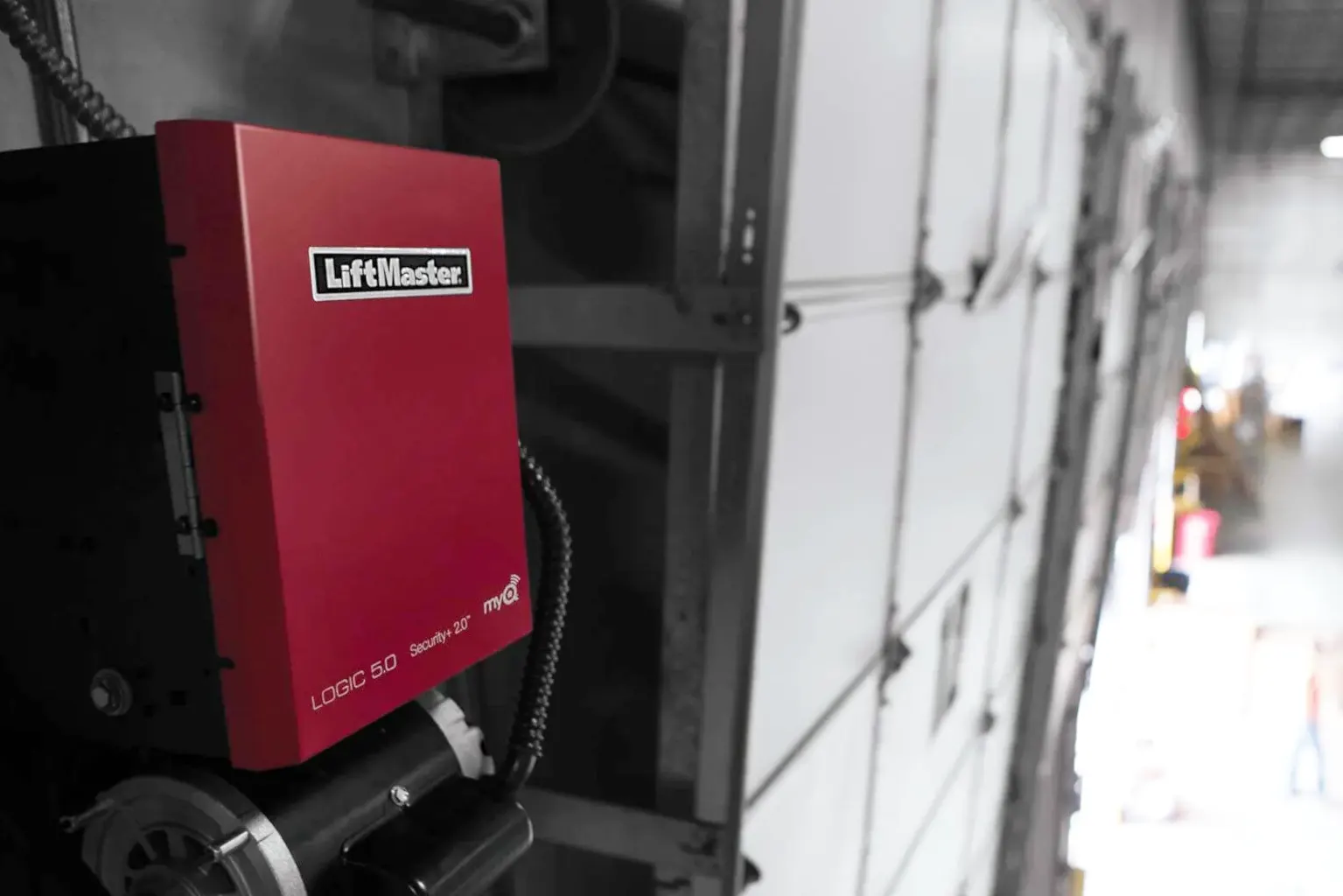

A residential opener runs 4 to 8 cycles a day. A commercial operator runs 40.
These aren't residential units with a different coat of paint. Higher-torque motor, heavier drive mechanism, industrial-grade logic board.
A high-cycle commercial operator is engineered for 30 to 100+ open-close cycles per day — loading docks, auto bays, warehouse entries. Put a residential unit rated for 8 cycles per day in a busy auto bay and it fails inside a year.
DiamondLift specializes in the operator unit itself: logic board, start capacitor, drive chain and sprocket, trolley assembly. The internal components that fail most often in high-cycle commercial environments are stocked on the vehicle. The fault history gets read before anything is touched. The job finishes the same visit.
For door-system mechanical issues (springs, cables, panels), see commercial garage door repair. For high-cycle reliability between calls, our maintenance contracts log cycle counts at every visit.
The Four Components Most Often Replaced in High-Cycle Operators
These are the parts inside the operator unit. Stocked on the service vehicle for the most common commercial models in the Milwaukee market — so diagnosis and replacement happen the same visit.
Commercial Logic Boards
The circuit board that controls operator functions and stores fault history. Read first, every call — even when the active code has cleared itself. Replacement boards stocked for the most common commercial models in the Milwaukee market.
Drive Chains & Sprockets
The chain pulls the trolley and moves the door. Stretched chain causes slip; loose chain wears the sprocket faster than anything else. Chain stretch measured against spec, not eyeballed. Matched sprockets stocked alongside the chain.
Start Capacitors
Provides the motor's initial surge of current under load. A weak capacitor causes humming, hesitation, or intermittent starts — especially in cold weather. Tested under simulated cold-start load, not a static test that misses borderline failures.
Trolley Assemblies
The component that connects the drive chain to the door arm. Wear at the trolley shows up as misalignment, hesitation, or noise during travel. Inspected visually as part of every diagnostic sequence, replaced from on-vehicle stock when fault patterns indicate it.

"The fault log told me about a capacitor warning two months before it would have failed."
Multi-bay facility in Waukesha. Manager said the motor was running but the door wouldn't move — classic drive-chain slip.
The chain had stretched past the point where the sprocket teeth could grip under load. Loose chain wears the sprocket faster than anything else — the sprocket had started shedding teeth on one side. Replacement chain and matched sprocket on the vehicle. 15 test cycles. Door ran clean.
Before I touched the chain, I pulled the fault code log. 22 fault events over the previous 90 days. Most were the same chain-slip code. Three were a different code — a start capacitor warning from two months prior.
The manager had no idea the capacitor had been throwing warnings. It hadn't failed yet, but it was going to — cold-start load in a Wisconsin December would have finished it. Replaced it the same visit. One trip. Both issues resolved. The fault log is why.
Three-phase facilities need a different diagnostic approach
A technician using the wrong diagnostic tools on a three-phase operator will miss faults that only appear under full motor load.
Some of the larger industrial facilities in Milwaukee and Waukesha County run three-phase power. A three-phase operator — wired to a three-phase electrical supply — requires different diagnostic equipment and wiring knowledge than the single-phase units in most light commercial applications.
Getting the phase configuration wrong during diagnosis produces misleading readings. DiamondLift confirms power configuration before running any diagnostics. That's not an extra step. It's the reason the diagnosis is accurate.
Single-phase or three-phase, both are within scope. The crew arrives prepared with diagnostic tools matched to the actual electrical environment the operator runs in — not a default set that produces guesswork on three-phase units.

Fault Log First. Parts Matched. 10-Cycle Verify.
Diagnostics first, parts matched to findings, post-repair testing before the job closes. The bay door operator tells us what happened before we touch it — if we read the log.
Fault Log & System Check
Full fault history pulled from the logic board — not just the active code. Power configuration confirmed (single or three-phase). Start capacitor tested under simulated cold-start load. Drive chain stretch measured. Sprocket teeth and trolley assembly inspected visually.
Parts Matched to Findings
Replacement parts matched to operator model and failure pattern. Logic boards, drive chains, trolleys, and start capacitors stocked on the vehicle. Secondary issues flagged in the fault log (like a capacitor warning alongside chain-slip) addressed the same visit — one trip, both issues.
10-Cycle Cycle Test
Minimum 10 full open-close cycles under normal operating conditions after repair. Fault code log confirmed clear. Chain tension confirmed stable across the cycles. If the operator connects to access control, the communication link is verified before close-out.
Operator down? Fault log read on arrival.
The bay door operator tells us what happened before we touch it — if we read the log. Tell us your facility type and what the operator is doing. We arrive prepared.
Three Commercial Operator Failure Patterns We See Most Often
Different symptoms, different fixes — same fault-log-first diagnostic on every call. The log usually catches the secondary issue the facility manager never noticed.
Motor Runs — Door Doesn't Move
Classic drive-chain slip. Chain stretched past the point where sprocket teeth grip under load. Sprocket teeth shedding on one side from running loose. Fault log showed 22 chain-slip events over 90 days — plus a capacitor warning the manager never saw.
Hum & Hesitate on Cold Start
Borderline start capacitor. Static test passed. Tested under simulated cold-start load — failed. A capacitor that starts the door on a 70°F July morning won't do it on a 5°F January morning. Replaced before the next cold snap.
Intermittent Fault — Resets Itself
Operator throws a fault, then clears itself before staff can read it. The active code clears, but the log keeps the history. Pattern of repeating intermittent faults pointed to a logic board at end-of-life on a 90,000-cycle operator — replaced before total failure took the bay down.
What Facility Managers Ask Before Calling DiamondLift
Specific pricing requires an on-site diagnosis. DiamondLift reads the fault code log and inspects all failure points — logic board, start capacitor, drive chain, sprocket — before quoting any cost. The quote reflects the actual failure, not a generic estimate. Call (414) 296-9783 to describe your operator’s symptoms and get a direct answer.
Most commercial opener repairs finish in one visit. DiamondLift carries logic boards, drive chains, trolley assemblies, and start capacitors on the vehicle. Diagnosis, repair, and a 10-cycle post-repair test typically run two to three hours. A second trip for parts is not the standard — it’s what happens when a technician shows up without them.
Yes. A fault code that clears itself is still stored in the logic board’s fault history. DiamondLift reads the full fault log, not just the active code. Intermittent faults that reset on their own are often a component reaching end-of-life — they show a pattern in the log even when the operator appears to be running normally.
Commercial garage door repair addresses the door system as a whole — panels, springs, cables, tracks, hardware. Commercial operator repair focuses on the motor unit, logic board, drive chain, sprocket, trolley assembly, and start capacitor. If the door hardware is intact but the operator itself is failing, that’s the scope this page covers.
Three-phase operators are within DiamondLift’s scope. Confirming the power configuration happens before any diagnostic steps begin. Running the wrong diagnostic tools on a three-phase operator produces misleading readings. DiamondLift confirms phase type first, then proceeds — so the diagnosis is accurate for the actual electrical environment the operator runs in.
The fault code log answers this directly. A logic board showing a single failure event on a relatively low-cycle operator is a repair candidate. A board with 30 fault events across multiple component codes on an operator running 80 cycles per day is often past the point where repair is cost-effective. DiamondLift reads the fault history and gives you that assessment before any work begins.
Commercial Opener Repair Across the Milwaukee Metro
Commercial calls in the Waukesha County industrial corridor and Milwaukee's metro business districts are a regular part of the weekly schedule. Mon–Sun 7AM start, Friday through 4PM. Morning dispatch is the design.
Fault log read, parts on the vehicle, door cycling before we leave.
Tell us your facility type and what the operator is doing. We'll arrive prepared to fix it the same morning — before your first shift is lost.
(414) 296-9783